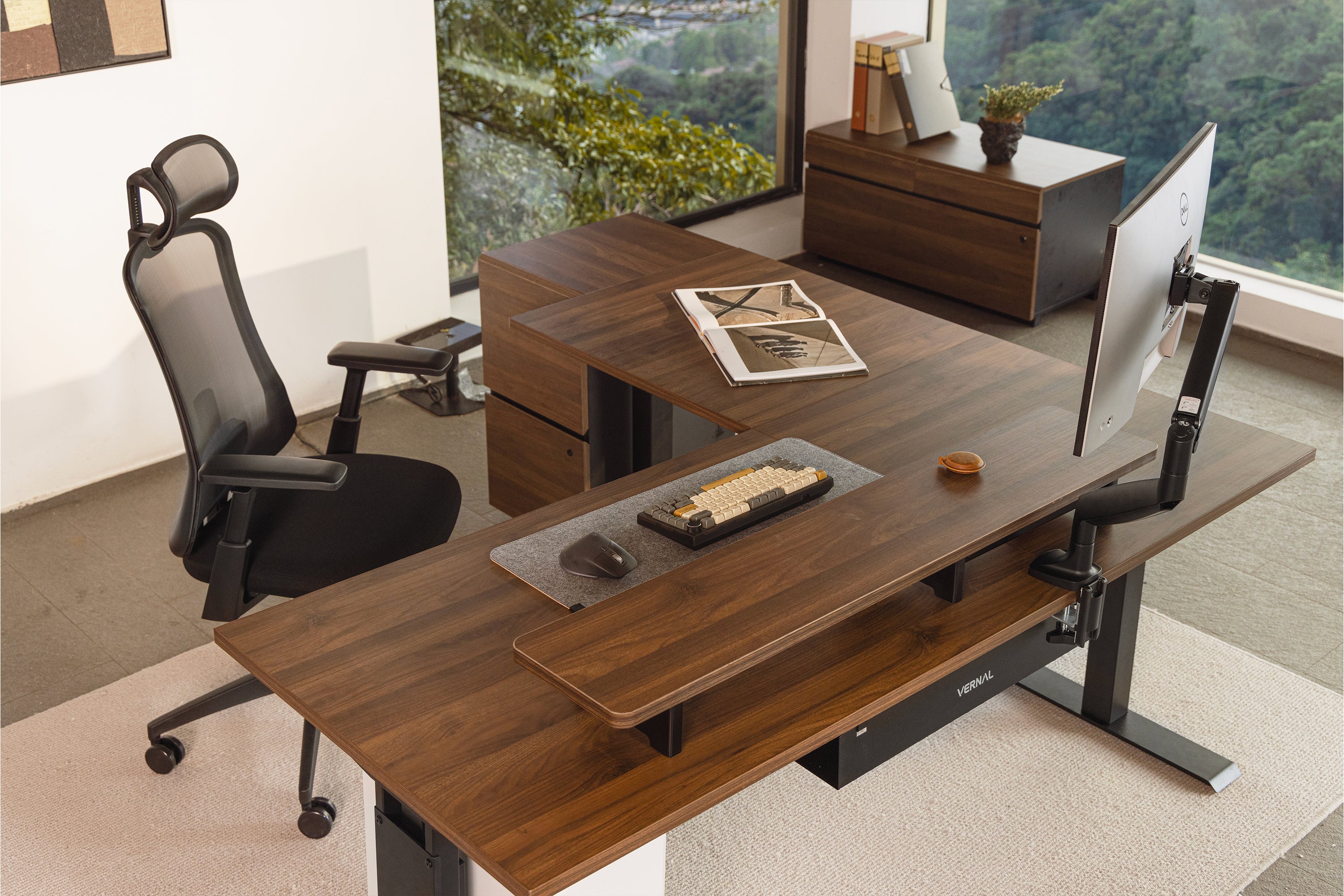
Working from home has shifted how we think about comfort, productivity and long-term health. If your day includes long stretches at a laptop, sore shoulders, or afternoon energy crashes, switching to a standing-friendly setup can be transformative. This article explains eight clear reasons to invest in a standing desk, compares popular desk styles, and gives practical tips to make the change easy and sustainable for your home office.
Standing Desks: more movement, less sitting
At the core of the standing desk movement is a simple idea — reduce prolonged sitting and add more movement to your day. Standing Desks make it natural to alternate postures, which can help improve circulation, increase alertness, and reduce the musculoskeletal strain caused by hours of static sitting. Rather than thinking of standing as an all-or-nothing choice, view a standing desk as a tool to encourage short standing breaks, micro-movements, and better blood flow across your workday.
Sit Stand Desk: flexibility that fits your rhythm
For most remote workers, a Sit Stand Desk hits the sweet spot between convenience and ergonomics. These desks let you swap between sitting and standing quickly, so you can adopt a rhythm that matches your tasks: seated for focused typing or detailed work, standing for phone calls or creative thinking. The lower friction of switching positions helps many users maintain better posture habits over months and years — because it's easy to do.
When picking a model, one of the first choices is the adjustment mechanism. An Adjustable Height Desk can be manual (hand-crank or gas spring) or motorized. An Electric Height Adjustable Desk offers effortless transitions and memory presets so you can return to favorite heights with a button press. The convenience of an electric model typically increases daily use: when changing positions is painless, people do it more often. Manual options remain attractive for budget-minded buyers who want reliability without a power connection.
Home offices often have to double-task as bedrooms, studios or living rooms. An Adjustable L Shaped Desk provides a lot of surface area while fitting snugly into a corner. This layout can separate computer work from sketching, printing, or other activities — and with height adjustability, both zones can be optimized for sitting or standing. L-shaped formats make it easier to preserve flow in small spaces while still encouraging posture variation.
If presentation or a premium feel matters, consider a Stand Up Executive Desk or a Wood Standing Desk. Executive-style tops provide ample real estate for multiple monitors, cameras, and lighting rigs — useful if you host frequent video meetings. A wood desktop adds warmth and permanence to a home office, making it feel like a true piece of furniture rather than a temporary setup. The key is to select a stable frame with sufficient load capacity so stylish tops remain functional and wobble-free.
Why investing saves money long term: health and productivity wins
Costs and benefits should always be weighed. A standing desk can be seen as an investment in reduced discomfort, fewer sick days, and improved concentration — outcomes that add up. Users who adopt a balanced sit–stand routine often report less back pain, fewer interruptions for stretch breaks, and better daytime energy. The cumulative effect of small improvements in movement and posture can reduce costly healthcare visits and improve sustained productivity over months and years.
Before you buy, check real-user evaluations. For example, some buyers search for a Vernal Standing Desk and read Vernal Space Reviews to learn about build quality, stability, and after-sales support. Reviews often highlight practical points that specs don’t show — how quiet the motor is, whether the desktop resists scratches, and how easy assembly turns out to be. Compare multiple sources of feedback to form a balanced view and choose a model that fits your priorities.
Quick setup and usage tips to make the switch work
Buying the right desk is only the first step. To make standing feel natural and sustainable, try these practical tips:
- Set ergonomic reference points: When standing, your elbows should be near a 90° angle and the top of your screen at eye level.
- Create a schedule: Alternate between 30–45 minutes sitting and 15–30 minutes standing, adjusting to how your body feels.
- Support your feet: Use an anti-fatigue mat and wear supportive shoes to reduce lower-limb discomfort.
- Add small movements: Walk to refill water, do gentle calf raises, or take a 2-minute stretch every hour.
- Keep accessories in reach: A supportive keyboard tray and a monitor arm help maintain ergonomic alignment across positions.
Choosing the right model for your home
Your ideal standing desk depends on work style, space and budget. Choose a Sit Stand Desk if you value quick posture switches; prefer an Electric Height Adjustable Desk if you want frictionless transitions and programmable heights. If your room is compact, an Adjustable L Shaped Desk can increase usable surface area. For a more classic look, a Wood Standing Desk or a larger Stand Up Executive Desk can upgrade your office aesthetics while supporting healthy movement. And if you want to learn from others, consult recent Vernal Space Reviews or other buyer feedback before committing.
Conclusion — small change, big payoff
Switching to a standing-friendly setup is not a panacea, but it is one of the most practical, evidence-informed changes you can make for your home office. Standing Desks and their variations — from sit–stand converters to full electric systems — help you break the cycle of long, uninterrupted sitting and build healthier habits into everyday workflows. With the right desk, a simple schedule and a few supportive accessories, you can protect your posture, sharpen focus, and make remote work feel better day after day.